
About DNA Mitigation
We help judges, prosecutors, and probation officers understand the human being behind the conduct, not simply the worst moment of their life.
Most clients come to DNA Mitigation through defense attorneys who have already seen our work shape outcomes in prior federal cases. Others arrive after researching similarly situated defendants and discovering the role mitigation videos played in those outcomes.
They come to us because they have already seen the precedent.
Built Inside Federal Mitigation
DNA Mitigation was founded by Daron L. Keet, who spent years directing national television campaigns for brands including Google, Subaru, Toyota, and American Airlines before bringing those visual communication disciplines into federal mitigation practice.
For five years, Daron worked alongside Cori Chertoff, one of the nation’s most respected mitigation specialists, collaborating with defense teams, forensic psychologists, and federal counsel on matters where strategic humanization contributed to substantial sentencing reductions.
When Cori took a sabbatical, she entrusted Daron with independently managing mitigation video matters for several of the nation’s leading federal defense firms.
Most mitigation video producers bring filmmaking skills to federal cases. Daron brought filmmaking experience shaped through years of direct federal mitigation practice.
We Enter Before Perceptions Harden
Legal defense and human understanding are different disciplines.
Our work begins before the Pre-Sentence Investigation Report is written, while institutional perceptions of the defendant are still forming. Our mitigation videos reach probation officers early, shape prosecutorial perception of the individual behind the conduct, and give judges something written submissions alone rarely achieve.
A human being, not simply a file.
Through a structured mitigation interview process refined across more than 30 federal cases, clients often reach levels of candor rarely accessed through conventional legal preparation alone.
The combination of high stakes, camera presence, and carefully developed elicitation techniques creates an environment where rehearsed narratives begin to dissolve and deeper human realities emerge: trauma, shame, psychological burden, unresolved loss, accountability, and personal history neither counsel nor client fully understood before filming began.
The result is not performance. It is human context revealed with an emotional clarity.
In many cases, the process itself reinforces accountability and reflection, distinctions directly relevant to § 3553(a) considerations involving rehabilitation, deterrence, personal history, family impact, and recidivism risk.
Judges do not respond to performance. They respond to authenticity.
A Strategic Advantage Counsel Controls
Unlike live testimony, mitigation video cannot be cross-examined.
It extends the power of allocution, allowing defendants to self-advocate before the court, express remorse, and accept responsibility without exposing themselves to unnecessary prosecutorial exposure.
For defense counsel, that distinction matters.
Defense counsel retains full editorial control throughout the process.
The Footage Counsel Almost Rejected
In the early years of federal sentencing mitigation, presentations traditionally relied on testimony from family members, clergy, psychologists, and community figures. A defendant’s own voice was widely considered too risky, potentially manipulative, strategically dangerous, and capable of backfiring before the court.
While working alongside Cori Chertoff, I spent significant time with one particular defendant while filming interviews with family and friends in his home. After hearing his story over breakfast one morning, I became convinced the court needed to hear directly from him.
Defense counsel agreed to let us film the interview, though skepticism was considerable. As counsel put it:
“You’re welcome to try, but there’s a 99% chance we never use this footage.”
Once they reviewed it, that calculus changed immediately.
What emerged was not excuse-making, but meaningful human context: childhood trauma, emotional hardship, and the personal history that shaped his judgment, trust, and decision-making.
The defendant spoke with unusual vulnerability about remorse, accountability, and the devastation caused by his actions. His self-advocacy became the emotional and moral center of the mitigation presentation.
The government sought a sentence of up to seven years.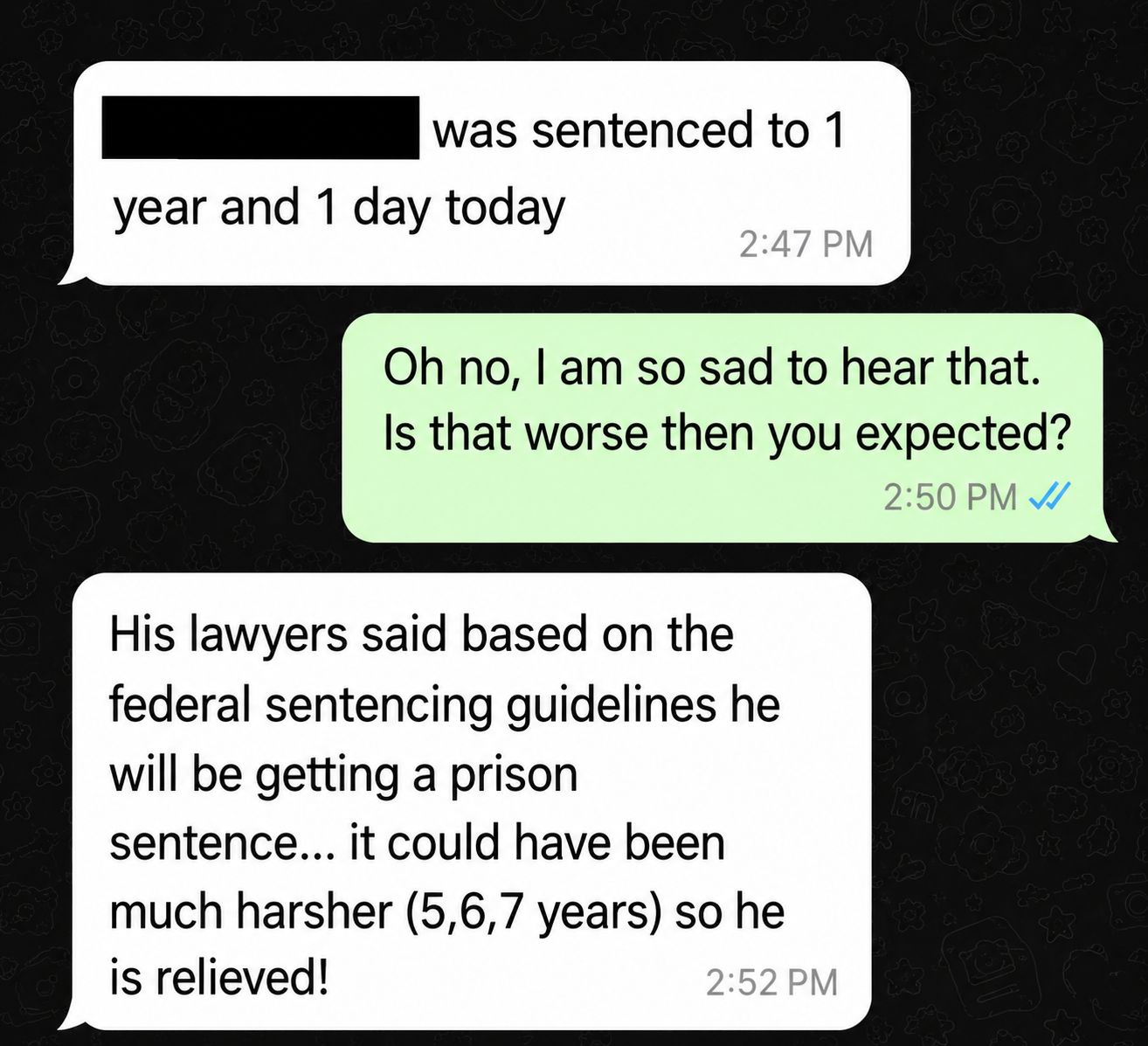
Our client ultimately received a sentence of one year and one day and was released from custody roughly two months later during the CARES Act period.
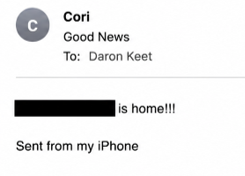
A few months later, Cori sent me an email I will never forget:
“Our client is home.”
That case helped shape what has since become central to our practice:
When authentically expressed, a defendant’s own voice can become one of the most powerful demonstrations of remorse, accountability, and rehabilitation that a court can encounter.
The Record
Across more than thirty federal sentencing matters, our work has contributed to outcomes substantially below guideline expectations, including probationary sentences in cases where incarceration was widely anticipated.
The record is public. The outcomes speak for themselves.
Federal Sentencing Matters
Mitigation Developed Before the PSR
Character Reference Letters Coordinated